 blog
blog
Affordable Alternatives to Custom Kitchen Cabinets
Table of Contents
- Affordable Kitchen Cabinets: A Realistic Cost Comparison
- The Benefits of RTA Kitchen Cabinets
- Refacing vs Replacing Cabinets Cost: Which Saves More?
- DIY Kitchen Cabinet Installation Tips for a Flawless Finish
- Longevity and Resale Value: What Cheap Cabinets Mean for Your Home
- Materials and Environmental Impact: MDF, Plywood, and VOCs
- Frequently Asked Questions
Last Updated: September 29, 2026
Affordable Kitchen Cabinets: A Realistic Cost Comparison
Custom kitchen cabinets blow up most renovation budgets, which is why so many homeowners search for affordable alternatives to custom kitchen cabinets before talking to a contractor. Stock and ready-to-assemble options dominate the market because they cut the largest cost driver in a remodel: custom millwork and the labor to fit it.
This guide from Sunshine Home Material breaks down what each alternative costs, how long it lasts, and where the trade-offs hide.
There are three broad paths: stock cabinets, semi-custom cabinets, and ready-to-assemble (RTA) units. Custom millwork is the fourth, most expensive path. Each trades money against time, fit, and finish durability.
The U.S. Department of Energy's remodeling guidance notes that cabinetry is one of the highest-cost components in a kitchen renovation, which is why the choice below drives your entire budget.
| Option | Relative Cost | Lead Time | Best For |
|---|---|---|---|
| Stock cabinets | Lowest | In stock | Fast, standard layouts |
| RTA cabinets | Low | 1-2 days (in stock) | DIY homeowners, tight budgets |
| Semi-custom | Medium | Weeks | Odd dimensions, some customization |
| Custom millwork | Highest | Months | Irregular spaces, high-end finishes |
Stock cabinets are pre-built boxes in fixed standard dimensions. You pick from what exists, and you design the kitchen around those sizes.
Semi-custom cabinets use stock boxes but let you adjust width, depth, and door style within limits. They cost more and take longer.
Custom millwork is built to your exact space and specification. It fits anything, and it is priced accordingly.
The Benefits of RTA Kitchen Cabinets
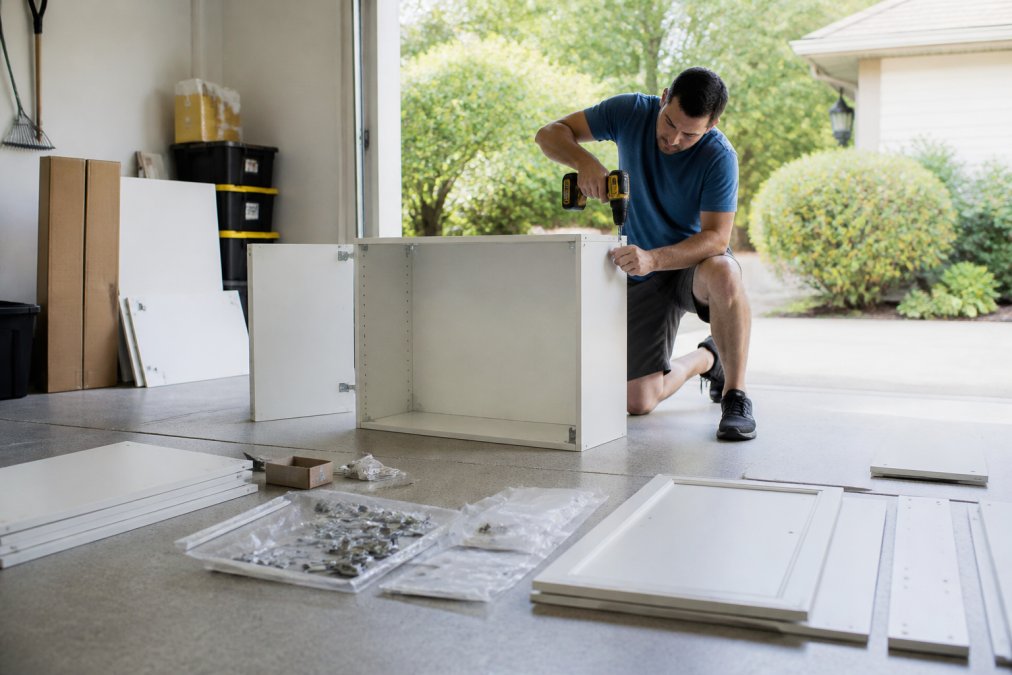
RTA kitchen cabinets arrive flat-packed and assemble on site, making them the default affordable alternative for budget-conscious homeowners. You trade assembly time for a lower price, and flat-pack boxes ship faster and cheaper than fully built units.
The practical advantages stack up quickly:
- Lower material costs because you are not paying for factory assembly labor
- Fast lead times since flat-pack units ship in compact boxes
- Easy replacement of a single damaged door or drawer front
- Straightforward DIY assembly with basic tools and a free weekend
What most guides miss is that box quality varies enormously between suppliers. A plywood box with solid joinery outlasts a particleboard box by years, even though both are "RTA." Check the carcass material before the door style.
Refacing vs Replacing Cabinets Cost: Which Saves More?
Refacing costs less than full replacement when your existing boxes are structurally sound, because you keep the carcass and swap only the doors, drawer fronts, and veneer. Replacement costs more but resets everything: boxes, hardware, layout, and finish. The gap is driven almost entirely by labor and box construction.
Refacing a typical kitchen can be less expensive than full replacement because you pay for doors, veneer, and finish labor rather than new boxes. Full replacement adds new carcasses, demolition, disposal, and often electrical or plumbing adjustments.
Reface if:
- The cabinet carcass is square, dry, and free of water damage
- The layout already works for how you cook
- You want a new look without moving plumbing or appliances
- The boxes are plywood or solid wood and the hinges still hold adjustment
Replace if:
- Boxes are swollen, sagging, or water-damaged
- The layout wastes space or blocks storage efficiency
- You plan to sell and want a fully updated kitchen
- You want to change cabinet dimensions, add a pantry, or move the sink
The Hidden Costs of Each Path
Refacing hides fewer costs than replacement, but it is not free of surprises. If your boxes are out of square, new doors will not sit flush, and a contractor may need to shim or rebuild the face frames before the veneer goes on. That prep work can erase part of the savings.
When Refacing Beats Replacement on Resale
Buyers rarely inspect the carcass. They see doors, drawer fronts, and hardware. A clean reface with new soft-close hinges and updated pulls reads as a new kitchen at a fraction of the replacement cost, making refacing the better ROI move when the boxes are sound and the layout works.
A Simple Decision Rule
If the boxes are solid and the layout works, reface. If the boxes are failing or the layout is wrong, replace. If you are somewhere in between, price both and compare the total installed cost, not just the cabinet cost. The installed number is the one that hits your budget.
DIY Kitchen Cabinet Installation Tips for a Flawless Finish
A flawless DIY cabinet install comes down to three things: a level line, consistent spacing, and patience with the hardware. Cabinets are heavy and unforgiving, so setup decides the result.
Follow these steps:
- Find the highest point of the floor and mark your level line from there. Never trust the floor to be flat.
- Locate and mark every stud along the wall before you lift a single box.
- Install the wall cabinets first, then the base cabinets, so you are not working over finished units.
- Clamp cabinets together before driving screws so the faces stay flush.
- Adjust soft-close drawers and hinges last, after everything is anchored.
- Check the reveal between doors as you go. A 3 mm gap looks intentional; a 6 mm gap looks like a mistake.
Longevity and Resale Value: What Cheap Cabinets Mean for Your Home
Cheap cabinets hurt resale value when the savings show, and help when the money goes into the right components. Buyers notice sagging doors, peeling veneer, and sticking drawers. They rarely notice whether the box is plywood or particleboard until something fails.
The 5-10 Year Cost of Ownership
Three factors decide how long cabinets last:
- Box material: plywood holds up better than particleboard in humid kitchens
- Hinge quality: cheap hinges loosen and stop holding adjustment
- Drawer slides: soft-close slides with a weight rating outlast basic roller slides
Budget cabinets often look fine for two or three years, then show wear: hinges lose adjustment, drawer slides grind, particleboard swells at the sink base. Each is a small repair, but they add up, usually right when you are thinking about selling.
What Buyers and Appraisers Actually See
Resale value is not driven by cabinet provenance but by what a buyer sees in the first thirty seconds and what an appraiser can document. A well-assembled RTA kitchen with quality hinges and slides reads as "new kitchen." Worn custom cabinets read as a project, and projects get discounted.
How to Protect Both Durability and Value
If longevity and resale both matter, prioritize solid box construction at the sink and dishwasher, quality hinges and slides everywhere, and a consistent finish across every door and panel. Those three choices do more for durability and perceived value than any upgrade to a pricier cabinet line.
Materials and Environmental Impact: MDF, Plywood, and VOCs
MDF and plywood are the two dominant cabinet box materials, differing in moisture resistance, weight, and hardware grip. MDF is dense, smooth, and takes paint beautifully, but swells when water reaches the edges. Plywood resists moisture better and holds screws more reliably.
| Material | Moisture Resistance | Hardware Grip | Best For |
|---|---|---|---|
| MDF | Low | Moderate | Painted doors, dry areas |
| Plywood | High | Strong | Sink bases, humid rooms |
| Laminate | High | N/A (surface) | Scratch resistance, easy clean |
| Veneer | Moderate | N/A (surface) | Real-wood look, lower cost |
Frequently Asked Questions
What are some cheap alternatives to kitchen cabinets?
Ready-to-assemble (RTA) cabinets are the most popular low-cost option, often costing 30-50% less than custom millwork. Other affordable alternatives include refacing existing cabinet boxes with new doors and veneer, installing open shelving for upper storage, and repurposing antique furniture like dressers or armoires as base cabinets. Stock cabinets from local suppliers also keep costs down because they come in standard dimensions and are available immediately without custom lead times.
Are RTA cabinets a good alternative to custom cabinetry?
Yes, for most homeowners. RTA cabinets use the same plywood box construction and soft-close hardware as custom units, but they ship flat and you assemble them yourself. This cuts installation labor and shipping costs significantly. The trade-off is limited door styles and fewer custom sizing options. If your kitchen layout uses standard dimensions, RTA cabinets deliver comparable durability at a fraction of the price. They are also a strong choice for rental properties and house flips where renovation ROI matters.
Is $10,000 enough for a kitchen remodel?
It depends on scope. A budget can cover RTA cabinets, laminate countertops, a new sink, and basic hardware if you handle some labor yourself. Custom cabinets alone can be a significant investment. To stay on target, prioritize cabinet carcass quality over decorative door styles, keep the existing layout to avoid plumbing and electrical changes, and use refacing instead of full replacement where the boxes are structurally sound.
What is the most inexpensive way to replace kitchen cabinets?
Refacing is typically the least expensive route. You keep the existing cabinet carcass and drawer slides, then apply new veneer to the boxes and install new doors and drawer fronts. This avoids demolition, disposal, and structural work. If the boxes are damaged, RTA cabinets are the next most affordable option because you assemble them yourself and avoid custom millwork prices. Pair either approach with hardware upgrades like soft-close hinges to modernize the look without a full gut renovation.